Can Quartz Countertops Go Over Existing Counters in Riverside?
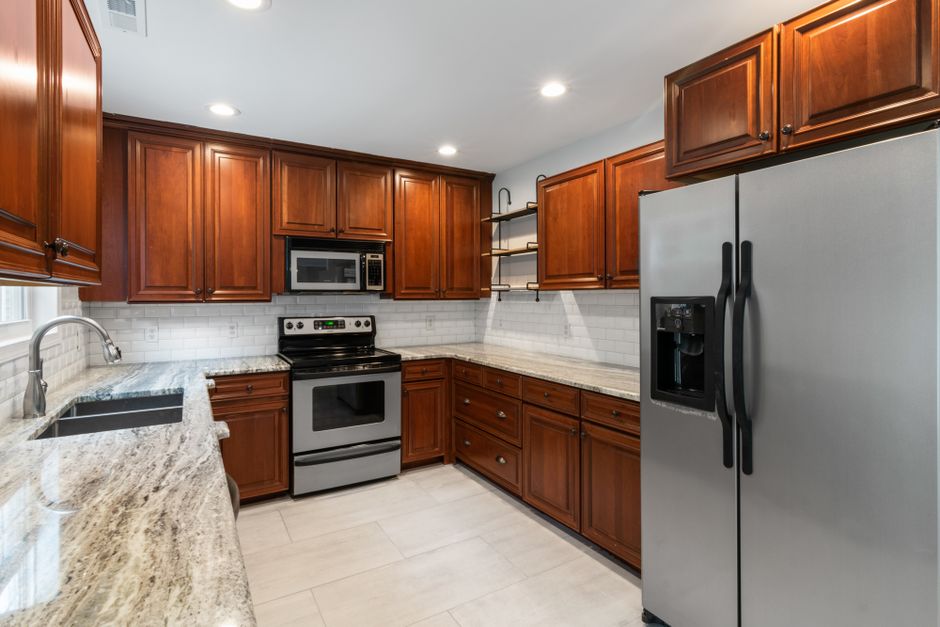
Quartz can go over an existing countertop only if you are using thin overlay panels made for that purpose and the old top is flat, solid, and firmly attached. A standard quartz slab, usually 2 cm or 3 cm thick, is not an overlay. It is meant to rest on the cabinet boxes after the old top has been removed. Before comparing quotes in Riverside, ask each installer which of the two products they are pricing, because the two jobs are very different.
Two Products That Get Called the Same Thing
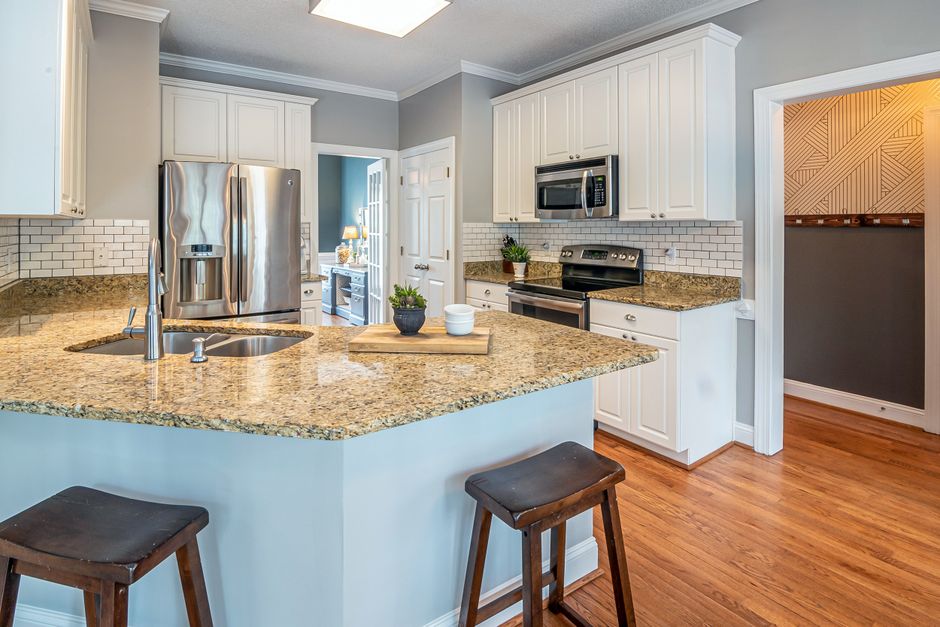
People often say "quartz over my old counters" and mean either of two things.
- Thin overlay panels are made to bond on top of an existing surface. They add less thickness than a full slab, but they still add height.
- Standard slabs are full thickness and need bare cabinet boxes to sit on.
A thin overlay does not perform exactly like a full thickness slab, and it is not guaranteed to be the faster or cheaper path. Extra work on the sink, faucet, edges, and repairs can erase the savings. Treat overlay as one option to test against your actual kitchen, not as a shortcut.
Test Your Old Countertop First
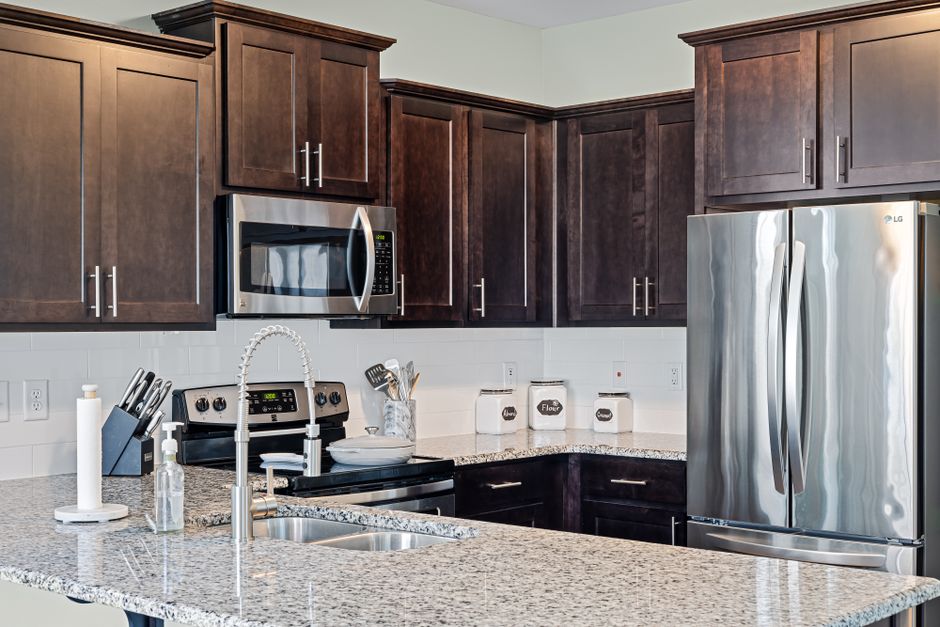
An overlay copies whatever is underneath it. If the base is wavy, loose, or damaged, the new surface will be too.
The straightedge check
Lay a long straightedge across the counter in several directions. If it rocks, or you see dips and gaps under the edge, the base needs to be fixed or removed. Seams on an overlay show more when the old surface is not flat, because the panels follow every high and low spot below them.
Laminate
Most laminate tops are particleboard underneath, and that core swells when water gets in. Press around the sink rim and the dishwasher area. Soft spots, bubbles, or raised seams usually rule out an overlay, because swollen particleboard will not hold anything flat.
Tile
Many older Riverside ranch homes from the postwar decades still have ceramic tile counters, and some of those were set on a thick mortar bed. Deep grout lines, cracked tiles, or hollow sounding spots make a poor bonding surface. A mortar bed top also adds a lot of height and weight for an overlay to sit on top of.
Granite
Builder grade granite in many 1990s and 2000s tract homes, in neighborhoods like Orangecrest and Canyon Crest, is often flat and sound enough to overlay. The thicker old edge then has to be wrapped or covered so it does not show as a layered edge.
What an Overlay Changes Around the Kitchen
Every overlay raises the counter. That small change ripples into several other parts of the kitchen.
- Height: Check dishwasher clearance under the counter, the gap to window sills, and how a freestanding or slide in range lines up with the new surface.
- Outlets: Switch and outlet boxes on the backsplash may sit too low once the counter rises.
- Sink: An undermount sink under an overlay sits much deeper below the finished surface, and the old cutout edge can show. Most overlay jobs switch to a drop in sink or replace the sink entirely. Confirm the plan before you pick a product.
- Faucet and accessories: Faucets and soap dispensers need longer mounting shanks to reach through the added thickness. Check that yours can mount on the combined layers, or plan on a new faucet.
- Backsplash: An overlay changes where the backsplash meets the counter, so plan the two together.
What Full Removal Gives You
Taking the old top off is more work, but it shows you what the countertop was hiding.
A look at the cabinets and walls
With the top gone, you can see the cabinet boxes, the sink base, and the wall behind the backsplash. Under sink rot, old leaks, and pest damage are common in older kitchens, and an overlay hides those problems instead of fixing them.
A level, secure base
Quartz is heavy. Before a full slab goes on, the cabinets should be level, square, and fastened to the wall studs. Loose boxes need shimming and securing, since a slab sitting on a twisting cabinet can crack at a cutout or seam. Riverside is in an active earthquake region, so base cabinets should also be anchored to the wall and to each other so a heavy top does not shift during shaking.
Dishwasher mounting
Dishwashers often screw into the underside of the old countertop. Quartz cannot take those screws directly, so with full removal the dishwasher usually gets side mounting brackets into the cabinets. Ask the installer how it will be secured.
What to expect during demolition
If you remove a mortar bed tile top, expect dust, heavy debris, and possibly cabinet repairs where the mortar was anchored. The cabinet tops may need leveling or a plywood subtop before new quartz goes on. Removing old tops also tends to damage backsplash tile and drywall, so budget time for backsplash repair or replacement either way.
Safety Before Anything Comes Apart
In homes built before the 1980s, old adhesives, mastics, backsplash materials, and wall coverings may contain asbestos, and painted walls may contain lead. Have suspect materials tested before demolition, especially when removing tile and mortar.
Cutting and grinding quartz releases respirable crystalline silica dust, a serious lung hazard. Most cutting should happen wet at the fabrication shop. Avoid dry cutting or grinding indoors, and keep people and pets away during any on site trimming. Quartz is an engineered, resin bound material, not natural stone, and cutting it on site is not a casual DIY task.
Overhangs, Seams, and Layout
Overhangs and bar tops need support. Both thin overlay panels and standard slabs need brackets or corbels on longer overhangs, and the old support should not be assumed adequate for the new material. Ask to see the seam layout before work starts, and keep seams away from the sink and cooktop when possible.
A Quick Way to Decide
Overlay is worth a serious look when all of these are true:
- The old top is flat, solid, and tight to the cabinets.
- There are no soft spots, swelling, or hollow areas.
- The sink, faucet, dishwasher, and range can all handle the added height.
- You are comfortable with a drop in sink or a new sink.
Full removal is the better call when any of these are true:
- The top is laminate with water damage near the sink or dishwasher.
- The top is tile on a mortar bed, or tile with cracks and uneven grout.
- You want an undermount sink.
- The kitchen is older and you want to check for leaks, rot, or pests.
Living With Quartz After Installation
Quartz is tough but not indestructible. Edges and corners can chip.
- Heat: Quartz is resin bound, so pots, pans, slow cookers, and air fryers can scorch or discolor it. Use trivets every time, especially near the range.
- Sealing: Quartz does not need sealing. If an installer sells a sealing schedule, ask why. That routine belongs to natural stone like granite and marble.
- Hard water: Riverside water is hard and leaves mineral film around faucets. Wipe the counter dry after use and clean with a mild pH neutral cleaner. Do not leave harsh acids, bleach, or oven cleaners sitting on the surface, since they can dull the finish.
- Outdoors: Do not use indoor quartz for an outdoor kitchen or patio bar. Strong Inland Empire sun can yellow or fade the resin over time, and dark surfaces make the heat worse. Choose a material rated for outdoor use.
Questions to Ask Before You Sign
- Is this a thin overlay panel or a full thickness slab?
- How will the old top be checked for flatness and soundness?
- What happens to the sink, faucet, and dishwasher?
- How will the raised height affect outlets, window sills, and the range?
- Who handles backsplash repair, and is it included?
- Where will cutting happen, and how is silica dust controlled?
A clear answer to each of these tells you more about an installer than a sample board does. If the answers keep pointing to repairs, hidden damage, or workarounds, full removal is usually the cleaner path for a Riverside kitchen.